Tuna Fish: Types and Habitat
Tuna is one of the most economically important fish species and plays a significant role in human diet and nutrition. As apex predators, they keep marine ecosystems healthy and balanced. Both natural and human factors affect the condition of this important marine resource and its habitats. Many studies have been conducted on the importance of tuna and on methods of harvesting and fisheries management.
According to research conducted in Web of Science, based on data collected between 1995 and 2019 and analyzed using CiteSpace, and examining the amount of publications by active countries, institutions, authors, and co‑cited references, the number of international research articles on tuna increased significantly between 2000 and 2010. During this period researchers paid greater attention to 19 main topics, especially overfishing, bycatch, climate change, marine pollution, and fishery management, all of which presented potential risks and challenges for the survival of tuna. Future research should emphasize addressing these challenges and creating international cooperation for proper management of tuna populations.
Introduction
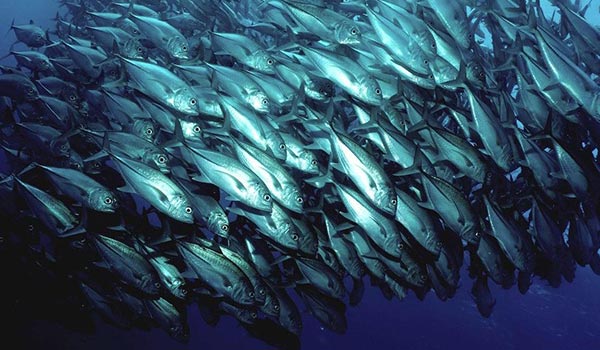
The tuna, bonito, and mackerel family includes many of the most important and well‑known food fishes. This family consists of 51 species, in 15 genera and two subfamilies. All species belong to the subfamily Scombrinae, except for the butterfly kingfish, which is the only member of the subfamily Gasterochismatinae.
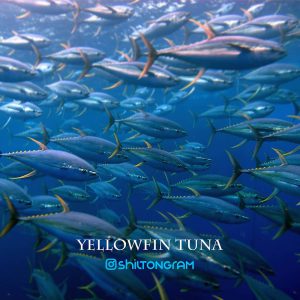
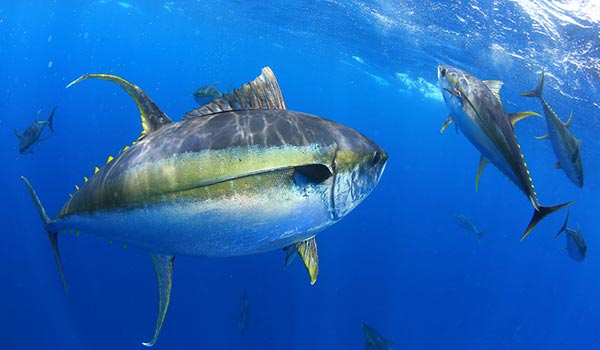
Scombrids are generally predators of the open ocean and are found worldwide in tropical and temperate waters. Because of their highly streamlined bodies and retractable fins, they are able to move rapidly. Some members of this family, especially tuna, are notable for being warm‑bodied, a feature that helps them maintain high speed and activity. They also possess a large amount of red muscle that allows them to sustain activity for long periods. Scombrids such as yellowfin tuna can reach speeds of 22 km per hour.
Life History
Tuna is an important commercial fish. Due to overfishing, some types of tuna such as bluefin tuna and bigeye tuna are threatened, which significantly affects tuna populations in the Atlantic Ocean and the northwestern Pacific Ocean.
Increasing amounts of tuna are also entering the market through operations that raise tuna in aquaculture enclosures in natural waters. In Australia, southern bluefin tuna, one of the three bluefin species, is raised in tuna farms by experienced fishers. Its close relative, northern bluefin tuna, has been used to develop tuna farming industries in the Mediterranean, North America, and Japan.
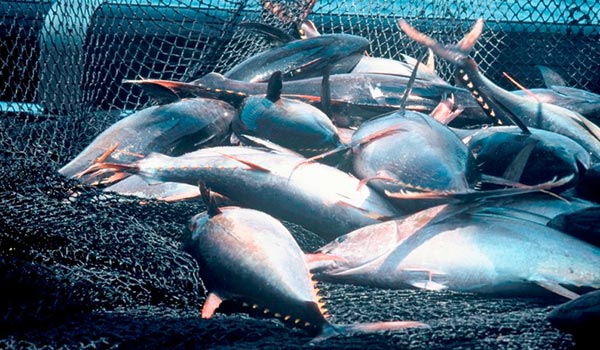
The average annual catch of tuna is about three thousand tons. Various methods are used to catch tuna. One method uses baited hooks that are suspended from a long line supported by a series of floats. Pole fishing is also carried out using a baited hook attached to a short line connected to a rod.
This method increased interest in tuna fishing. In 1979, when yellowfin tuna were abundant, 115 vessels were engaged in fishing. Tuna fishing also attracted great attention as a sport, which led to heavy investment in boats and fishing equipment. However, in 1980, yellowfin tuna became scarce and the industry practically collapsed. Fishers then turned toward smaller catches such as yellowfin, bigeye, and skipjack.
Tuna play an important role in marine food webs and create significant changes in marine ecosystems, especially in relation to pollution. Tuna are also generally known as a healthy food, rich in high‑quality protein and omega‑3 fatty acids, such as docosahexaenoic acid (DHA) and eicosapentaenoic acid (EPA), along with other essential nutrients that play an important role in disease prevention and treatment.
They are traded internationally as canned products, sashimi, and sushi. Because of their wide distribution, rich stocks and resources, and high economic value, tuna have become a dominant species in global fish markets in 85 countries, accounting for 61% of the total catch by weight in the high seas, which has become one of the main concerns for tuna development.
Illegal fishing also exists and threatens stock rebuilding programs. Overfishing and unsustainable fishing have caused a decline in fish populations around the world. Another major challenge for tuna fisheries is that fishing equipment also results in bycatch (discarded and accidental catch).
Climate and Environmental Pressures
Climate change is another significant stress factor in marine ecosystems. Tuna stocks are also challenged by climate change. Environmental pollution in marine ecosystems is widely distributed, and tuna are exposed worldwide to mercury, persistent organic pollutants, and other harmful contaminants. The amount of pollutants varies depending on the location where the tuna is caught.
Histamine food poisoning is one of the health risks associated with tuna consumption. Excessive consumption of tuna meat contaminated with these pollutants may lead to serious health problems. Therefore, monitoring pollutant levels in fish is essential for assessing human exposure to contaminants through diet.
Although tuna are important for marine ecosystems and humans, both natural and human factors influence marine living resources and their socio‑economic status. Over the past decades, scientists have conducted many studies to protect livelihoods and improve the efficiency of tuna utilization.
Methods
CiteSpace has been the main software used for exploring and visualizing Web of Science (WOS) scientific literature since 2004. Using mathematical and computational methods, it can present a systematic review of information in a visual form.
This method has been used by bibliometric researchers in fisheries and other fields such as medicine and social sciences. It can intelligently collect relevant documents from databases, analyze knowledge links and networks between cited and citing documents, discover patterns of knowledge flow between documents, and then convert them into graphs to show the relationship between development trends and scientific structure.
Among the fishing countries of the world, Indonesia ranks first in tuna catch and accounts for 12% of the global tuna catch. Indonesian tuna is always exported abroad. Tuna is also the largest export commodity of the Philippines, which after Indonesia has become the largest tuna exporter in Asia and the third largest tuna catch exporter in the world (7%).
Thailand is the largest canned tuna operator in the world and dominates the canned tuna market. The reason for the gap between catch volumes and research publications in these countries should be further investigated in order to identify the factors contributing to this difference.
Sustainable Fisheries
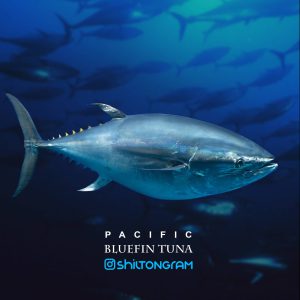
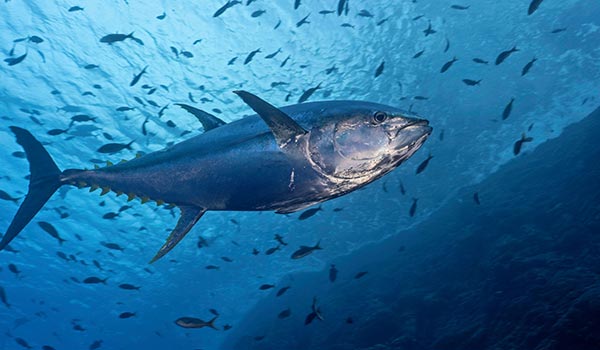
Sustainable fisheries help maintain enough fish in the oceans and healthy tuna populations. Bluefin tuna, as top marine predators and the largest tuna species, play an important role in maintaining the balance of marine ecosystems.
Although bluefin tuna represent less than 10% of tuna stocks, they have one of the highest values due to global sashimi markets and always command high prices in sashimi markets worldwide.
Overfishing has caused a decline in Pacific bluefin tuna populations, with 95% of Pacific bluefin caught during their juvenile stage. The biomass of this population recovers slowly and has been listed as endangered by the IUCN Red List.
Overfishing has also created stress in the food chain. Aquaculture has made sustainable production possible. Farmed bluefin tuna gradually replaces wild‑caught products and has very high value.
In addition to bluefin tuna, stocks of bigeye and yellowfin tuna have also been overfished in some parts of the world. With increasing marine pollution, harmful substances enter tuna meat and create problems.
Why We Need Tuna
Tuna are essential for a healthy ocean ecosystem. At the top of the food chain, tuna act like a pump that moves nutrients toward the ocean surface, where plankton need them for growth, oxygen production, and carbon dioxide absorption.
Large fish such as tuna can also become important blue carbon sinks, meaning that when they die they sink and carry all the carbon stored in their bodies to the deep ocean where it remains.
Tuna are also the most commercially valuable fish in the world. They are an important part of the food system, providing protein resources for fishers and supplying products for supermarkets. Because of their popularity, at least one‑third of tuna species are caught using illegal methods or in illegal locations. If no action is taken, tuna will no longer be able to support ocean health or the food system.
Back to Biology
The World Wide Fund for Nature (WWF) recommends using the Spawning Stock Biomass ratio (SSB) to measure the health of tuna populations.
The SSB ratio shows how many reproductively active tuna remain in the current population compared with the original population. It is a powerful indicator because it considers the healthy population condition as a baseline and also accounts for the number of large fish in the population.
For tuna stocks to remain at a healthy level, they should be maintained or rebuilt to at least 40% of their original spawning biomass, with fishing that does not disrupt the ability of the stock to recover.
The Back to Biology report evaluates how many tuna stocks currently meet this criterion. It shows that among 21 temperate and tropical tuna stocks, only 4 stocks with available data are above the SSB target and 3 stocks are close to the target. At least 6 stocks are below the target, and 8 stocks have not been evaluated based on this criterion.
Our Ocean Approach
WWF calls on governments, tuna Regional Fisheries Management Organizations (RFMOs), tuna suppliers, and retailers to adopt a comprehensive approach to tuna management and supply.
With the goal of maintaining healthy stock levels and recognizing the reduction of environmental and social impacts of tuna fishing, there is an urgent need to look beyond supply chain certifications and fishing gear and consider the entire tuna stock.
Tuna RFMOs and their member governments are responsible and accountable for the sustainable management of tuna and other marine species within their jurisdictions. Suppliers and retailers also play an important role by using their purchasing power to help change the future of tuna.
Sustainability and Management Issues
The global catch of tuna species is about 4 to 5 million tons, but it has shown an increasing trend since 1950, and at least 33% of these stocks are currently fished unsustainably.
In addition, endangered sharks, seabirds, sea turtles, and even marine mammals such as dolphins are caught and killed as bycatch in tuna fisheries. All three species of bluefin tuna are endangered.
Ineffective tuna management measures and insufficient enforcement by tuna RFMOs and their member governments have allowed overfishing and unsustainable fishing practices to put pressure on tuna populations and the marine ecosystems of which they are a part.
Having larger tuna and larger populations allows them, like other large animals such as whales and dolphins, to contribute to helping oceans absorb carbon and combat climate change.
Ecology and Evolution
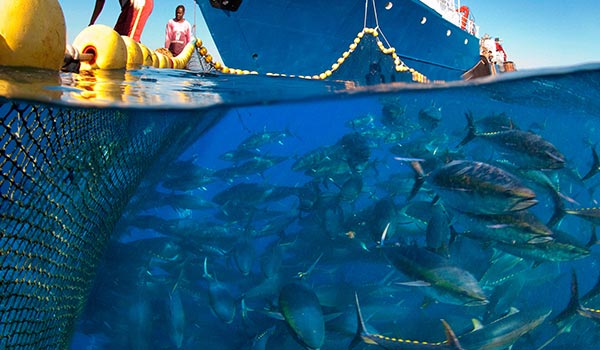
Climate change causes tuna migration, which can be disastrous for small islands that depend on them. Small Pacific island states depend on their commercial fisheries for food supply and economic health.
New research shows that climate change is dramatically changing tuna stocks in the equatorial Pacific Ocean, which may have severe consequences for the people who depend on them.
As climate change warms Pacific waters, some tuna species will be forced to migrate into the high seas and away from the jurisdiction of these islands. These changes affect three main tuna species:
Skipjack
Yellowfin
Bigeye
Pacific island countries such as the Cook Islands and territories such as Tokelau charge foreign fishing operators for access to their waters and depend heavily on this income.
Research estimates that the movement of tuna stocks could reduce annual government revenue in some small island states by up to 17%. This loss would harm developing economies that rely on fisheries income to maintain essential services such as hospitals, roads, and schools.
Climate Change and Migration
Tuna species are highly migratory. They move long distances depending on ocean conditions. Skipjack, yellowfin, and bigeye tuna are mainly found in Pacific island waters.
The concentration of these stocks usually shifts each year between more eastern regions during El Niño years and more western regions during La Niña years.
However, under climate change, these stocks are predicted to move eastward out of national waters and into the high seas.
As the tropical Pacific warms, the western Pacific warm pool (a body of water in the western Pacific with consistently high temperatures) will shift eastward, which will consequently shift major fishing grounds for some tropical tuna species.
Island States at Risk
The Western and Central Pacific Ocean accounts for more than half of global tuna production. Most of this catch comes from the waters of ten small developing island states, which depend disproportionately on tuna stocks for food security and economic development.
Tuna stocks are vital for the current and future economic development of these states and have been sustainably managed for decades through cooperative agreements. However, analyses show that this income and other important fisheries benefits are at risk.
What Our Research Found
Our model predicted that by 2050, the total biomass of the three tuna species within the combined jurisdictions of the ten Pacific island states will decrease on average by 13 to 20 percent.
However, if greenhouse gas emissions are kept at a lower scenario, the expected impacts will be much smaller.
What Can Be Done?
Limiting and reducing greenhouse gas emissions to levels consistent with the Paris Agreement would reduce many climate impacts for these countries, including changes in tuna stocks.
In many parts of the world, climate change effects combine with each other and create complex changes. Our study identifies new direct and indirect consequences of climate change for some of the most vulnerable populations in the world.