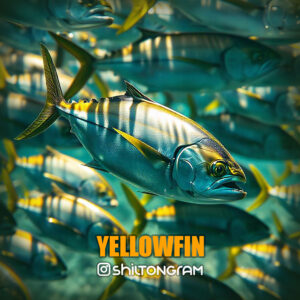
tuna fish (Yellowfin)
Yellowfin Tuna (Guider)
Yellowfin tuna is a highly migratory species found in warm seas throughout the world, except for the Mediterranean Sea, and it is capable of traveling across entire ocean basins. Few fish can swim as powerfully as tuna. Their fins help reduce turbulence and drag while moving through the water. Guider grows quickly; despite its relatively short lifespan, its distribution across the oceans is much wider than that of many other species.
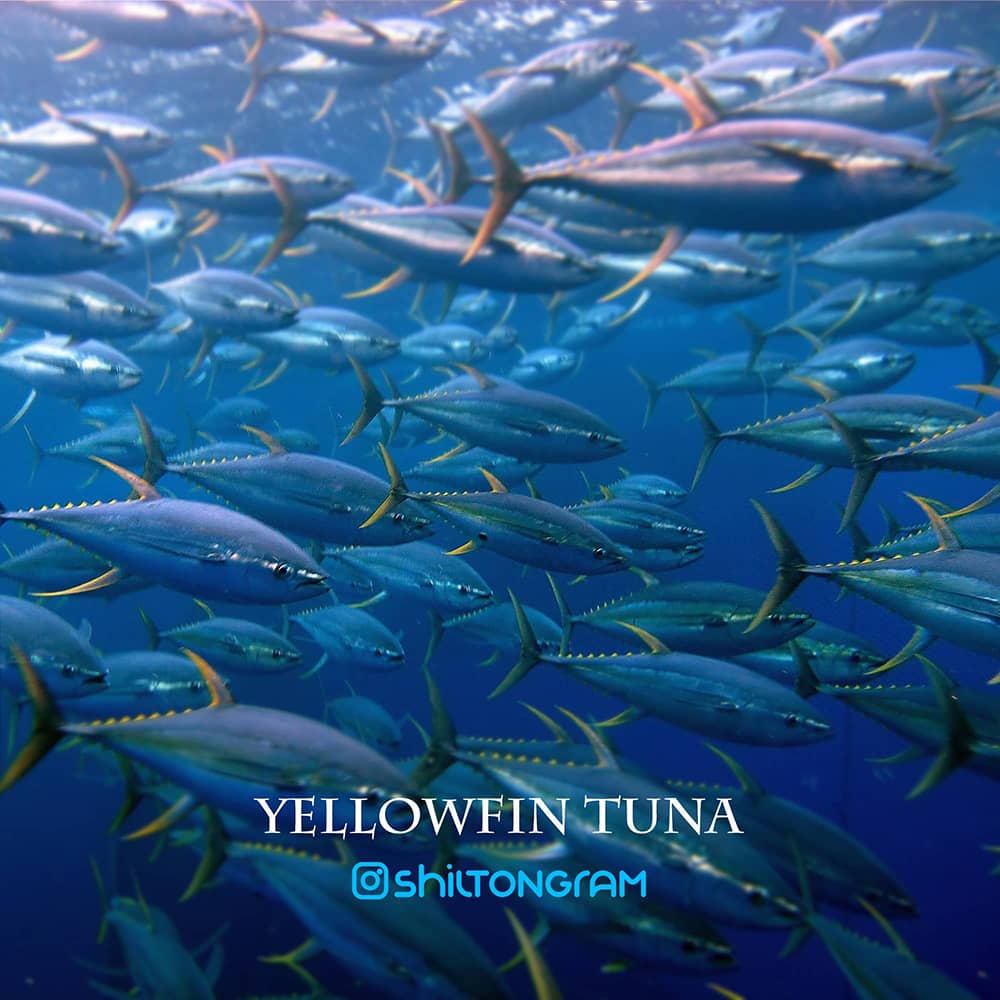
Yellowfin tuna has a sleek, torpedo-shaped body designed for fast movement. Its coloration is dark blue on the back, gradually changing from yellow to silver toward the belly. The dorsal and anal fins are bright yellow, which is the reason for the name “yellowfin.” It can be difficult to distinguish this species from other tuna, except for the long, sickle-shaped dorsal and anal fins found in large adults, which set it apart from other species. Yellowfin can grow up to 1.8 meters in length and weigh more than 180 kilograms. Adult guider can also be identified by their long, bright yellow dorsal fin and the yellow stripe along the lower side of the body.
Yellowfin tuna has a mild, meaty flavor. When raw, the flesh is bright red, and when cooked it turns grayish-brown. The texture is firm and moist with large flakes. Yellowfin tuna is available fresh, frozen, or canned, and it is often served raw as sashimi or sushi.
This fish can be found in Hawaii throughout the year, although its presence peaks from May to September. It is also found along the Canary coasts during the summer months of July and August. In addition, it occurs year‑round in the Gulf of Mexico and along the Louisiana coast. Yellowfin tuna inhabit tropical and subtropical oceans worldwide, including waters around the U.S. Pacific Islands and Southern California. They are highly migratory and travel long distances across warm oceans. As water temperatures rise with the seasons, they migrate annually toward higher latitudes.
Yellowfin larvae and juveniles remain in surface waters, while older fish are often found in deeper waters. Adult yellowfin also gather in areas rich in phytoplankton and zooplankton or where smaller prey species are abundant. They are most commonly found within the upper 100 meters of the water column but can dive to depths exceeding 1,000 meters. This species is known for long migratory journeys toward higher latitudes when warm currents are present and also congregates in highly productive areas where prey is plentiful. In the open ocean they feed on small fish, squid, and invertebrates such as marine crabs.
Yellowfin usually uses its body weight to remain at depth. Fishermen typically scatter bait on the surface first and then distribute it deeper in the water column. Artificial lures are also commonly used for fishing, and squid bait is particularly attractive to yellowfin.
These fish are highly migratory and undertake long migrations every year. These movements are likely related to their spawning behavior and feeding needs. The species reproduces through broadcast spawning, in which several females and males release millions of eggs and sperm simultaneously in open water, forming a swirling aggregation of fish. This strategy increases the chances of fertilization while reducing the likelihood that eggs will be eaten by predators.
Although most fish are cold‑blooded, yellowfin tuna possess a specialized blood vessel structure that allows them to maintain a body temperature higher than the surrounding water. This adaptation provides a major advantage when hunting in cooler waters, enabling them to move faster and more efficiently. Yellowfin tuna are among the fastest swimmers in the ocean.
Like some shark species, yellowfin must swim continuously. Fish obtain oxygen by passing water over their gills. Tuna cannot do this effectively while stationary, so they must keep moving forward with their mouths open to maintain oxygen flow through their blood.
There are fifteen different species of tuna worldwide, and we carefully select yellowfin tuna for its superior quality, taste, and sustainability. Yellowfin, also known as Guider or Ahi tuna, is a popular fish and is widely used in Shilton canned tuna production lines. With their streamlined bodies and binocular vision, they travel quickly, hunt skillfully, and are preyed upon mainly by marine mammals and sharks. Their predators include sharks and large marine mammals.
This species requires international cooperation to monitor sustainable stock levels. Yellowfin are typically found in mid‑ocean waters toward the surface and inhabit the warm climates of the Atlantic, Pacific, and Indian Oceans.
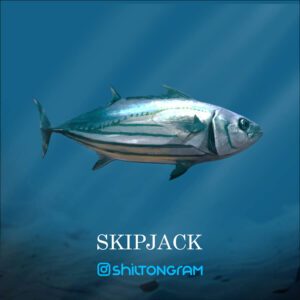
Yellowfin tuna often travel in groups with companions of similar size. They sometimes school with other tuna species and mixed groups of small yellowfin, especially skipjack tuna. Acoustic tracking shows that some also follow moving vessels. Managing highly migratory species such as Pacific yellowfin tuna is complex because they travel thousands of miles across international boundaries and are caught by many countries. Therefore, effective conservation and management of this resource requires both international cooperation and strong domestic management.